Archive for February, 2010

SearchAlliance.com

February 18, 2010

To get more information about the Microsoft Yahoo Search Alliance type SearchAlliance.com into your browser.

You will be taken to Microsoft’s new page announcing their partnership with Yahoo.

Microsoft Yahoo SearchAlliance.com

Microsoft Yahoo SearchAlliance.com

To Microsoft’s credit, they acquired and redirected SearchAlliance.com to their advertising site before formally notifying their customers about having received federal government approval  of a Search Alliance with Yahoo.

With the addition of SearchAlliance.com, Microsoft now has 26,893 domains registered.

Microsoft appears to have just flipped the switch on their new domain because SearchAlliance.com is still showing up for sale in Google search results.

SearchAlliance.com

SearchAlliance.com

Microsoft hasn’t yet begun buying Adwords to promote their news to Google’s audience.

Google Vancouver Olympics Gadget

February 17, 2010

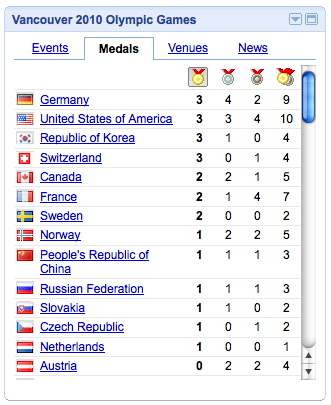
Add a personalized version of the Olympics Games to your iGoogle page with the Vancouver 2010 Olympic Games Gadget.

Google Olympic Games Gadget

Google Olympic Games Gadget

Once added to a iGoogle page, users can select and view Olympic Events, Medals won by each Country, Event Locations via the Venues link and Olympic News.

Events Medals Venues News

Events Medals Venues News

The Google Vancouver 2010 Olympic Games Gadget is a great tool for getting Olympic News delivered to your browser as soon as it becomes available.

Total Audience Measurement Index?

February 16, 2010

From the Wall Street Journal:

NBC calls it “the world’s biggest focus group.”

With an estimated 185 million unique viewers over a 17-day period, the Olympic Games provide a special audience microcosm, and one that NBC believes will be particularly useful for measuring new-media consumption habits and trends.

NBC touts all the different platforms it is bringing to bear for the Games, which began Friday in Vancouver. Viewers can watch on the network, NBC Universal’s many cable channels and NBCOlympics.com. They can download clips to their iPhones and receive mobile updates on a favorite skier or figure skater.

Alan Wurtzel, NBC Universal’s head of research, predicts big shifts in viewership habits compared with the last Olympics, held in Beijing in 2008, with large increases in the number of people who catch the games on mobile devices and who simultaneously watch on TV and the Web.

But much is still unknown about how to measure the audiences of many of these outlets, and it is tough to sell ads without an accurate understanding of how people consume new media and media outside the home.

Measuring all the various outlets is a “burning issue” among advertisers, says Thom Gruhler, president of Interpublic’s McCann-Erickson in New York.

NBC has hired at least six different market-research firms to help keep tabs on Olympics viewership, including Nielsen Inc., Arbitron Inc. and Integrated Media Measurement Inc.

NBC has hired Keller Fay, which specializes in word-of-mouth marketing, to monitor social-networking Web sites and viral communication by measuring Olympics-related phone and live face-to-face conversations.

Some of the measurement technology is experimental. While Portable People Meters have been in use for three years, the specially outfitted mobile devices are largely used to measure radio consumption, not TV. NBC says it is important to test new research techniques beyond the standard meters attached to television sets.

NBC will release a daily “total audience measurement index” or “TAMi” that will tally how many people watched the Olympics on the various platforms. That information will be supplemented with daily interviews with 500 viewers and will help NBC understand why, for example, a viewer watched a downhill wipeout on a laptop while the TV set showed a reality show.

The network’s Olympics research budget is in the mid-six figures. That’s a small portion of the cost of the games for NBC, which expects to lose roughly $250 million on the Games after paying $820 million for the broadcast rights.

The fact that NBC would spend $820 million dollars for the broadcast rights to the Olympics yet will spend a couple hundred thousand dollars to research how their’s and presumably their advertisers messages will be consumed elsewhere other than television illustrates the difference between old media’s and new media’s commitment to advertising performance.

While new media lives and dies by advertising measurement and effectiveness, old media is only slightly interested in its advertising effectiveness online  – just not that interested.

I wonder why?

What’s Around Here In Google Maps

February 15, 2010

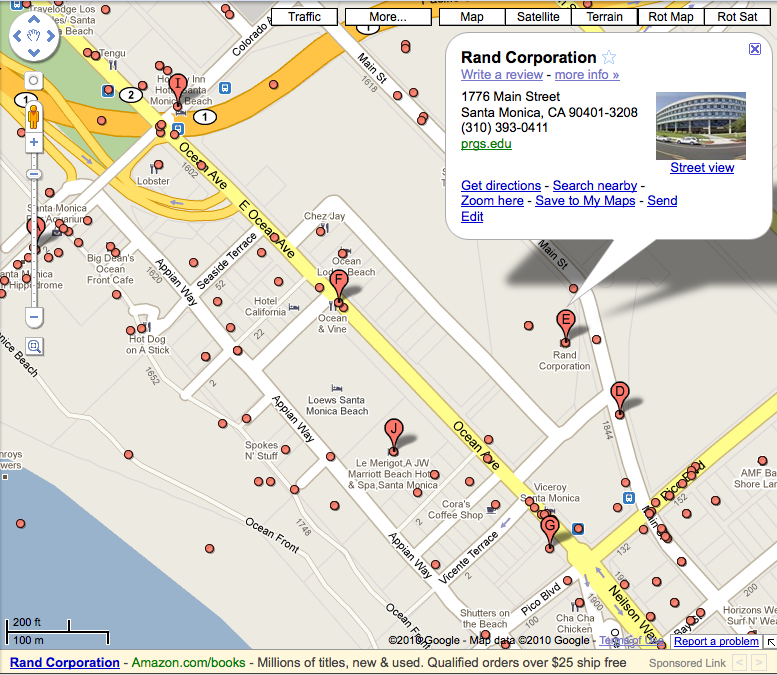
Google Maps has added a new search button for users to click called “What’s Around Here?”

What's Around Here Google Maps

What's Around Here Google Maps

Clicking the Google Maps “What’s Around Here?” button produces most every other public data Google has gathered about the location and its surface.

What's Around Here

What's Around Here

This search feature should provide Google Maps visitors a richer user experience while increasing Google’s page views at the Maps level.

Personal Data Publishing

February 14, 2010

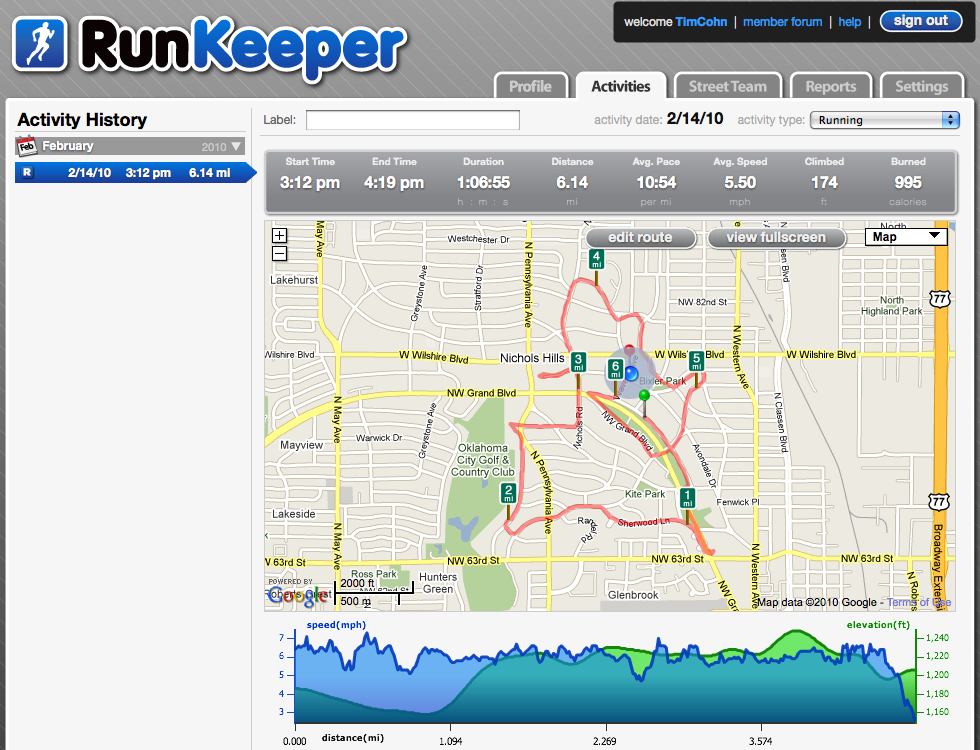
Today I began using RunKeeper to measure and record my personal running stats as they are broadcast from my iPhone.

As you can see, the application keeps track of most of the data generated during a run.

Personal Data Publishing

Personal Data Publishing

What other personal data and activities could a smartphone broadcast to the web for measurement, recording and publishing that haven’t yet been developed?

Google Isn’t Bad For The Newspaper Business

February 13, 2010

If the general circulation newspaper industry’s content had commercial value to its advertisers, additional traffic sent by Google would continue to enrich both newspaper publishers and their advertiser benefactors.

Google has simply proven the real market value of the general circulation newspaper industry’s content to their own advertisers.

Google Doodle Winter Olympics 2010

February 12, 2010

The Winter Olympics begin today February 12, 2010 and Google has an Olympic Torch featured prominently in lieu of their “l” on their home page.

Google Doodle Winter Olympics 2010

Google Doodle Winter Olympics 2010

How long will Google keep their Olympic logo displayed on the Google home page?

Throughout the length of the 2010 Winter Olympics or just through the opening ceremonies tonight?

MySpace Signal Strength

February 11, 2010

I posted a link about the firing of the MySpace CEO to my Bit.ly account today.

Nothing out of the ordinary about posting the hiring and firings of executives to Bit.ly.

Yet, of say the one thousand stories I have posted to Bit.ly the article describing the firing of the MySpace CEO receives the dubious distinction of not receiving a single click – a first for my Bit.ly account.

MySpace Bit.ly

MySpace Bit.ly

If this inactivity is any indication of the market’s disinterest in MySpace the business, its no wonder the CEO was fired.

Journalism Isn’t Transactional For Advertisers

February 10, 2010

I have been thinking about this for some time and needed to clarify a previous position where I first said “The audience for journalism isn’t transactional”.

After further thought, I then simplified my point to: “Journalism isn’t transactional”.

A reader pointed out the ambiguity in my position by asking: “Write good stories and I’ll buy them?”

I think I have now found a more defensible position: “Journalism isn’t transactional for advertisers”.

“News isn’t transactional for advertisers” may be even more clear and to the point.

Everybody Wants An Audience

February 9, 2010

Why does Facebook have 400 million users worldwide?

Facebook Everybody Wants An Audience

Facebook Everybody Wants An Audience

Because Everybody wants an audience.