The Four Steps Of Computational Thinking

November 5, 2010

From the Google Research blog:

The four steps of computational thinking are:

1. Problem decomposition: the ability to break down a problem into sub-problems

2. Pattern recognition: the ability to notice similarities, differences, properties, or trends in data

3. Pattern generalization: the ability to extract out unnecessary details and generalize those that are necessary in order to define a concept or idea in general terms

4. Algorithm design: the ability to build a repeatable, step-by-step process to solve a particular problem

Understanding and mastering the four steps of computational thinking ought to be a requisite for graduation for every single high school student in America.

Facebook Local

November 4, 2010

Unlike almost every other person in the tech business, I don’t think Facebook’s local products will transform commerce.

Facebook Local

Facebook Local

How To Optimize Your Business Plan In Five Simple Steps

November 3, 2010

Optimizing a business plan has been simplified by Adeo Ressi.

How?

Reduce what your business does to just five sentences that you can answer the following questions in less than a minute.

1. My company (your company name)

2. is developing (a defined offering)

3. to help (a target audience)

4. (solve a problem)

5. (with secret sauce)

Business Plan Optimization

Business Plan Optimization

While Mr. Ressi has indeed reduced and simplified the formula for communicating a successful business plan down to a soundbite, actually being able to do it – often proves to be anything but simple.

Mobile Coupon Usage Survey

November 2, 2010

From eMarketer:

According to some predictions in 2009, mobile couponing was ripe for takeoff. While relatively few mobile users had redeemed a coupon through their phone, many were interested, and Yankee Group predicted an increase in the number of mobile coupons redeemed in North America in 2010 from 200,000 to 2.3 million.

But consumers have been slow to climb on board. According to a September 2010 survey conducted by OnePoll for mobile transaction network mBlox, fewer than 15% of US mobile subscribers have redeemed a mobile coupon. This is about twice the penetration Yankee Group found in 2009.

Mobile Coupon Usage

Mobile Coupon Usage

I don’t ever expect mobile couponing to scale alongside mobile phone penetration.

Mobile Phone Analysts who think the numbers alone drive the story will continue to be proven wrong.

Google Hot Trends Peak Time Stamp

November 1, 2010

I noticed for the first time today the Google Hot Trends USA Google Gadget has placed a PDT time stamp on some search query when they have reached their peak.

Google Hot Trends Time Stamp

Google Hot Trends Time Stamp

Prior to seeing the PDT time stamp, I can only recall seeing a query’s peak time stamped with 1-8 hours ago.

Google Hot Trends Peak

Google Hot Trends Peak

Is this new or am I just late in noticing?


Another Search Engine: Blekko

October 31, 2010

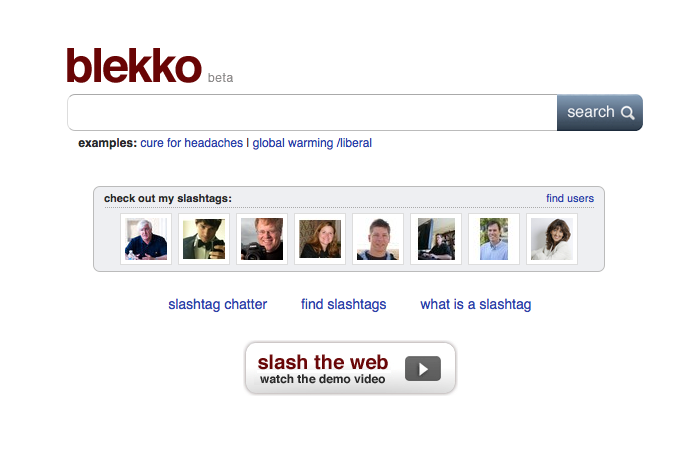
Today another search engine launched – this one called blekko.
Blekko

Blekko

What is blekko?

From the blekko site:

blekko is a better way to search the web by using slashtags. slashtags search only the sites you want and cut out the spam sites. use friends, experts, community or your own slashtags to slash in what you want and slash out what you don’t.

blekko has also created its own ten point “web search bill of rights” –

1. Search shall be open
2. Search results shall involve people
3. Ranking data shall not be kept secret
4. Web data shall be readily available
5. There is no one-size-fits-all for search
6. Advanced search shall be accessible
7. Search engine tools shall be open to all
8. Search & community go hand-in-hand
9. Spam does not belong in search results
10. Privacy of searchers shall not be violated

I guess my first question is who cares about any of the above?

What person or business for that matter has lost sleep at night worrying about whether or not the search business was doing its job adequately?

I think they only definitive answer to this question is – whoever has decided they need to build a new and hopefully better search engine.

While inevitable, I think in order for any new entrant into the Search Engine market to have a fighting chance – they will first have to come up with another category description for their product if they want their new product to be entertained let alone used repeatedly.

Web search as a category has become fully associated with and thus controlled by Google and its brand.

Because of this any market entrant into the web search engine business by definition will be just another search engine.
 

Google’s Halloween 2010 Scooby Doodle

October 30, 2010

The headline potential for Google’s Halloween 2010 Scooby Doo doodle was just to easy to pass up.

So… enjoy Google’s Halloween 2010 Scooby Doodle!

Google's Halloween 2010 Scooby Doodle

Google's Halloween 2010 Scooby Doodle

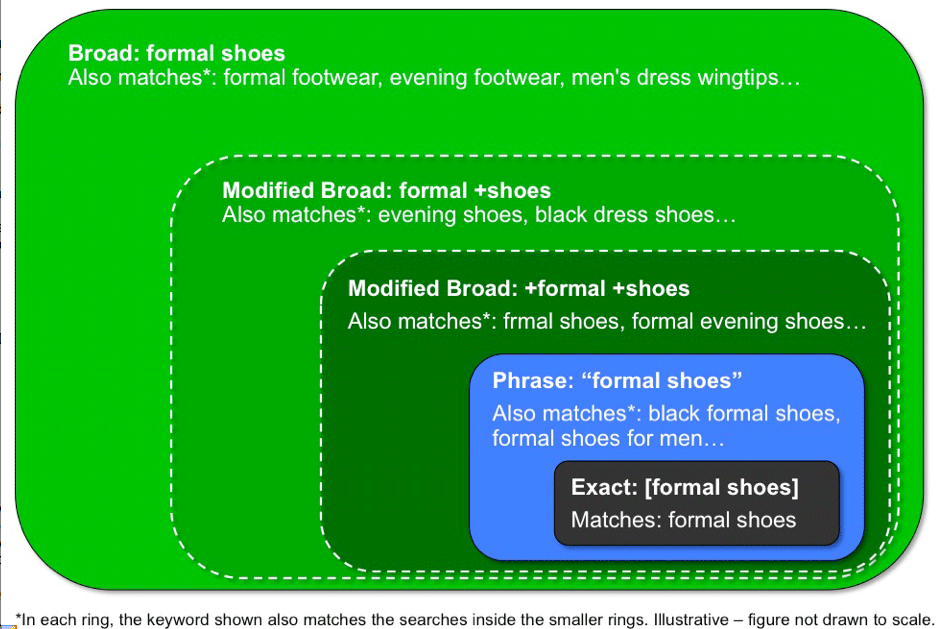
More About Google AdWords Broad Match Modifier +InfoGraphic

October 29, 2010

What is the Google AdWords Broad Match Modifier?

From AdWords Help:

The broad match modifier is an AdWords targeting feature that lets you create keywords which have greater reach than phrase match, and more control than broad match. Adding modified broad match keywords to your campaign can help you get more clicks and conversions at an attractive ROI, especially if you mainly use exact and phrase match keywords today.

You implement the modifier by putting a plus symbol (+) directly in front of one or more words in a broad match keyword. Each word preceded by a + must appear in the user’s search exactly or as a close variant. Depending on the language, close variants will include misspellings, singular/plural forms, abbreviations and acronyms, and stemmings (like “floor” and “flooring”). Synonyms (like “quick” and “fast”) and related searches (like “flowers” and “tulips”) are not considered close variants.

See the Broad Match Modifier Infographic to learn more about it works.

Google AdWords Broad Match Modifier

Google AdWords Broad Match Modifier

Google AdWords Modified Broad Match Keywords

October 28, 2010

Want more conversions, more control and comparable ROI?

Google AdWords suggests modified broad match keywords may do the trick.

Modified Broad Match Keywords: More Conversions, More Control, Comparable ROI

Modified Broad Match Keywords: More Conversions, More Control, Comparable ROI

My experience would suggest so too…

Running exact or phrase match only campaigns does produce highly relevant traffic yet it does so at the expense of volume.

If you are looking for more traffic, try modified broad match – doing so should double your paid search traffic – traffic almost as relevant as exact or phrase matched keyword traffic.

We’re On The Map

October 27, 2010

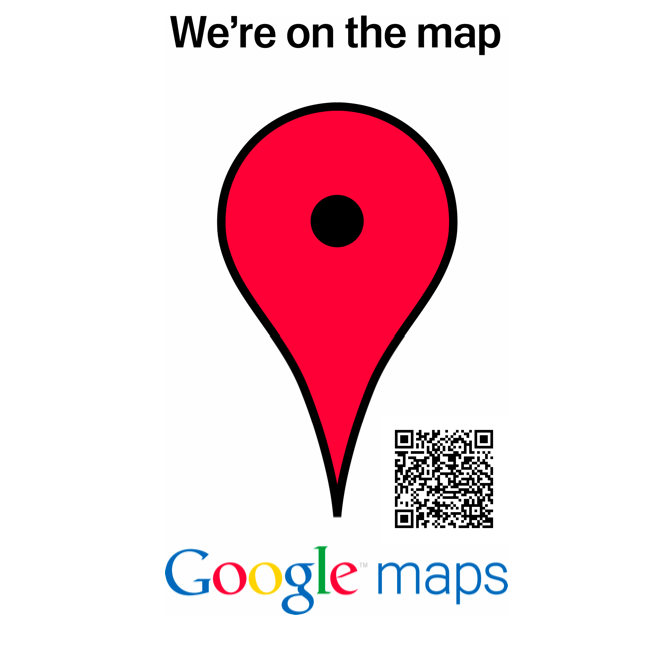
Don’t know if this is like being in the phone book or not but my Google Places account now has a Google QR Code.

Here it is –

Advanced Marketing Consultants QR Code

Advanced Marketing Consultants QR Code